In the previous part of this series, we talked about the first big answer to the question posed in part 17:
If it’s not carbs, not sugar, not fats, not red meat, not plants, not animals, why are we dying from diabetes, hypertension, and heart attacks and hunter gatherers aren’t? What are we doing wrong?
The first part of the answer was that the food we eat is highly palatable, far more than anything our hunter gatherer ancestors ever had access to.
In this part, I’m going to give you the second part of the answer.
Food Efficiency
As mentioned multiple times in this series, it’s been about 2.5 million years since the emergence of our genus Homo and we’ve been hunter gatherers for more than ~99.6% of it.
We were subsistence farmers for ~0.39% of it. And we’ve been in the industrialized world for less than 0.01% of our history.
Even though we live in the modern industrialized world, our brains have not caught up with our modern environment.
Much of our brain wiring is the result of the evolutionary selection pressures faced by our ancestors, and the ancestors they evolved from, etc.
For much of the history of our genus (and the species they evolved from), there were multiple ways to obtain food, and some were more effective and efficient than others.
Members who were more efficient and effective at securing food/energy/calories were more likely to pass on their genetics to the next generation, and over time we have brains that are highly optimized to handle the choices faced by our ancestors.
For example, if you are a hunter gatherer, and you have a choice to either:
- Go hunting
- Go fishing
- Dig for tubers
- Look around for some sweet sweet honey
- Do nothing and just stay hungry
What do you spend your day doing?
Certainly not option 5 because your genetics have evolved to drive you crazy with hunger to force you to act and find some damn food.
So you’re left with the other 4 options.
Given that the time and energy you have is limited, and your need for food is real and pressing, you have to be efficient.
The option you pick would depend on the area you live in and the situation you are in (season, etc.).
For example, if you live in an area where game is scarce and fish is plenty, you’d probably pick fishing because it’s a more efficient use of your time. You’d get more return on your investment of effort.
The point is that evolution has wired you to value efficiency when it comes to your diet. If you can obtain a food in two ways, where one is easier and less time consuming, while the other is harder and more time consuming, you will naturally opt for the easier and faster method.
Optimal Foraging Theory (OFT)
Researchers have studied the decisions that animals have and turned it into a mathematical model called Optimal Foraging Theory (OFT). (The term foraging means “searching for food”)
I want to keep this series practical and not make it too science heavy, so if you want to learn more about OFT, you can do so yourself. The main thing I want to show you is the very intuitive equation:
Reward = (Eg – Ee) / (H + S)
Eg = Energy gained from the food.
Ee = Energy expended to obtain the food.
H = Time taken to handle the food (skinning, cooking, cleaning, processing, eating, etc.)
S = Time taken to search for the food (going to a place to dig for tubers, looking for animal tracks, etc.)
It is intuitive because it basically shows that animals are roughly prioritizing the net energy they’d get per unit of time expended.
This doesn’t mean that humans and animals are running calorie math in their heads all the time. It means that they behave as if they do i.e. this is how their brains are wired.
We’ve seen the model hold good across many species (including humans) and it makes intuitive sense. It’s a part of the evolutionary pressures facing all species – the need to secure energy.
Even plants follow something similar to OFT. When soil is very rich in nutrients, plants invest less energy into building roots and more into building shoots. And vice versa.

Now, this model is not perfect (it can’t be because it’s too simple and only considers a few factors) and has its limitations.
For example, it only takes into account energy and time as incentives. If we only cared about energy, we’d all be vegans eating wheat all day.
What we actually do is feed tons of plant calories to cattle to convert them into fewer meat calories. We do this because there are things abundant in meat that are scarce in plants, and we want to obtain them.
So the model is not perfect, but is strongly directionally correct.
How Hunter Gatherers Search and Handle Food
Hunting involves many kilometers of walking, time spent tracking the animal, then the effort needed to chase and kill the animal.
Once you have the animal, you have to carry it back all the kilometers, skin it, and cook it before you can eat it.

Gathering involves walking many kilometers to locations where tubers are abundant, digging for the tubers with sticks and rocks.
Once you’ve gathered a bunch of tubers, you have to carry them back all the kilometers, and often roast them before you can eat them.

Basically, obtaining food that you can put in your mouth and eat is a task that requires time and energy.

This is one of the reasons why hunter gatherers love honey (as covered in part 17, about 15-20% of a Hadza’s daily calories come from honey).
Honey costs very little energy to obtain and does not require cooking to be consumed. The Hadza will drop everything and harvest honey whenever they get a chance to do it.
This is also why hunter gatherers generally do not go out looking to collect leafy vegetables. If it costs 200 calories to collect 100 calories, it’s not worth the effort. They’ll usually only do it if they are easily available or for medicinal purposes.
“Prioritizing greens” as a central part of your diet is a luxury of the modern world.
How Modern Humans Search and Handle Food
Food Search
Very few of us ever hunt or grow our own food.
We have a very efficient system called the economy where we trade our products and services for money, and use the money to purchase whatever we want.
Crops are grown and animals are raised in bulk with maximum efficiency to drive down costs and maximize profits.
If you translate time taken to earn money into food rewards, you’d realize just how efficient the system is.
If you make $20 an hour, and use that $20 to purchase food, how much energy have you obtained? Far more than any hunter gatherer ever can.
For example, you buy 2 large pizzas for $20. They’ll be delivered to you hot in 30 minutes or less.

How many calories did you obtain in 1 hour of work? Over 3000? Maybe even over 4000? (That’s about 2 days worth of energy for the average person.)
Is there any way a hunter gatherer could ever obtain 4000 calories in 1 hour of work? No.
Ok, maybe on a rare occasion where a big prey was waiting to be caught right next to home and a fire was already ready to cook it, but that’s the rare stroke of good luck. It would be a JACKPOT.
Modern humans on the other hand, have this “rare stroke of luck” at their fingertips whenever they want. You are hitting the jackpot constantly.
The food search process is essentially cost free. You can obtain thousands of calories for less than an hour of work.
Food Handling
Not only is it easier to search for food, but food handling is also easier.
We don’t skin our animals. We don’t eat super fibrous tubers that we chew and then have to spit out the fiber.
In my hometown in rural India, one thing we used to enjoy as children was eating sugarcane. You chew the sugarcane to squeeze out the sugary juices from it, and then spit the fiber out.

It takes effort to eat like that. In the city where I live now, sugarcane juice is sold in cheap bottles and you can drink as much as you like.
You don’t have to peel or chew anything. You can drink hundreds of calories in sugarcane juice in less than a minute because all you have to do is open the bottle and drink.
In fact, none of the tubers we eat (like potatoes) are very fibrous so we don’t have to spit out anything. In fact, it’s come to the point that many people in industrialized societies see spitting food out, a completely normal human behavior in nature, to be “uncultured” and “disgusting”.
The meat you buy is ready to cook. You don’t have to de-skin or de-feather the animal.
The fire you need to cook is readily available at your gas or electric stove. You don’t have to gather sticks to cook anything.
If you don’t feel like cooking, you can go to a restaurant and choose from a variety of options to eat. You don’t even need to wash dishes.
Or you can order food home. You can eat packaged foods you bought and kept in your fridge last week.
Basically, the energy and time needed for food handling is as low as it can get.
To put it simply, modern food is CHEAP and CONVENIENT. This combined with hyper palatability, drives massive long term overeating.
Remember that high palatability alone does not cause people to overeat things.
The food also has to be OBTAINABLE (cheap/affordable) and FRICTIONLESS (ease) to consume.
There are tons of highly palatable foods that aren’t the cause of the average person getting fat because they can’t afford these foods.
Ease of consumption also matters.
For example, walnuts are highly palatable and you can easily eat a thousand calories in walnuts if you have a bag of them to munch on. I know because I once ate a full bag of almonds and walnuts during a flight.
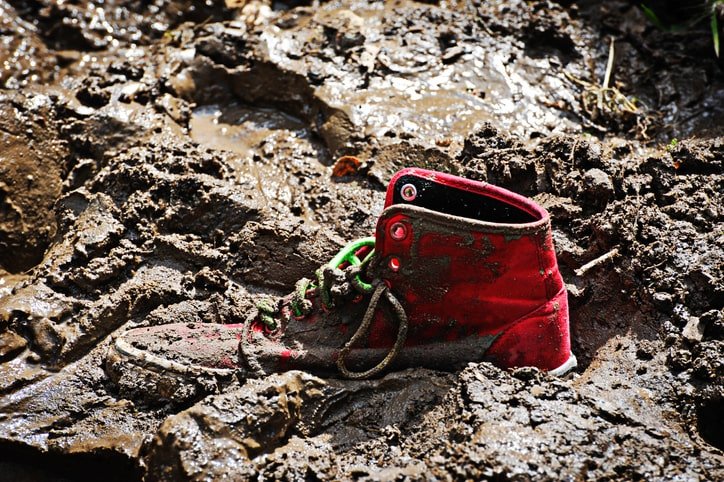
On the other hand, have a look at how walnuts are found in nature. Here’s an image of a walnut I picked from a forest during a trek. It’s still in its shell, broken in half.

How many walnuts would you eat if you had to break open each and every one of them with a rock and then scoop out little pieces of walnut with a stick or with your fingers?
Not as many as you would if you just get them in a packet. And not as fast either.
Moderation is Not in Your Genetics
One thing about hunter gatherers is that they don’t eat in moderation.
Moderation is something modern humans have to do because of the food environment we are in.
Hunter gatherers are often hungry, and when they say they are hungry, it does not mean the low level of hunger that makes you want to check the fridge for some snacks. It means that they haven’t had much to eat all day.
When they do get food, they pig out. They eat till they are full, and then they eat some more. This is actually healthy for them because food does not come by as easily, so when they get it, they must capitalize on the jackpot.
Someone who ate a lot whenever food was available was in a far better position to pass on their genes to the future.
You are wired to pig out on food. Moderation is you fighting your DNA (this is why it does not work in practice for the vast majority of the population).
The better answer to the original question
To refresh your memory, I’ve reprinted the question from part 17 below.
If it’s not carbs, not sugar, not fats, not red meat, not plants, not animals, why are we dying from diabetes, hypertension, and heart attacks and hunter gatherers aren’t? What are we doing wrong?
With the information in this piece, we have more of the answer:
People in industrialized societies are surrounded by highly palatable addictive foods that are available cheaply and conveniently. Our food is calorie dense, addictive, easy to get in our hands, and easy to consume.
Everything is frictionless. To hunter gatherer brains, it’s a JACKPOT. They are constantly subjected to the “I’ve hit the jackpot so let me eat as much as I can to capitalize” evolutionary mechanism.
All of this drives them to overeat and thus carry excess body fat. This leads them to develop heart disease, diabetes, and hypertension over time.
Practical Recommendations
1) Keep food hidden from plain sight.
Don’t keep food on your desk or other places where it is highly visible. This will get you to munch on them without noticing and eat tons of extra calories that you otherwise would not have.
I had a fat co-worker many years ago back in the day and what he used to do was that he’d keep a large box of snack foods (sometimes chips, sometimes bhujiya, etc.) on his desk at all times for anyone to eat.
What ended up happening is that everyone who sat around him ended up eating those foods. Because it was just so easy to eat them.
All you had to do was move your hand a bit and grab a few bites. You could easily eat an extra 300 calories that day simply because you were seated next to the fat guy and his big box of junk food that he was generously making available to everyone.
2) Don’t stock junk food.
Many people have genetics that strongly prioritize food. This means that if something highly rewarding is available to them, their brains will constantly poke at them to go and eat it.
Eventually after a period of resistance, they will give in.
If you’re in this group, make no mistake, you must stop stocking junk food in your home. If it’s not in your fridge, you can’t munch on it when you feel a little hungry.
I’m this way with chocolate. If I have chocolate in the house, I’m going to eat it. There’s nothing that can stop me. I’ll eat less dinner to make it fit my calories, but I will end up eating the chocolate.
The only thing that works is to not have chocolate in the house. If someone gifts me chocolate, I give it to someone else.
Stock healthy and low calorie foods in your fridge so you can eat them instead when you are hungry. Like Greek yoghurt, zero calorie soda, etc.
3) Go out to eat. Don’t order food.
If you want to eat restaurant food, make a personal rule that you never order junk food home. If you want to eat them, go out to the restaurant and eat them.
This adds barriers to the process of eating highly palatable foods.
Ordering a pizza is easy. All you gotta do is make a phone call (nowadays the kids use apps).
Going out to eat involves changing your clothes, getting to your car, driving to the pizza shop, waiting for the pizza to arrive, and then driving back.
A good percentage of the time, you’ll skip the junk food entirely if you have the “go out to eat” personal rule/consumption barrier set up.
The more friction you can introduce between you and the consumption of highly palatable foods, the better off you will be.
4) Eat a set number of meals at set meal times.
You can actually make your health much better with 1 simple rule: Eat 3-4 meals a day.
- Breakfast
- Post-workout
- Lunch
- Dinner
Do not eat when it’s not time to eat. The reason why it works is that it eliminates snacking. Snacking is a huge reason why people are so fat. They are grazing all day on high calorie junk.
Simple rules like this help you beat cravings. Just because you feel slightly hungry at 5 PM does not mean you need to check the fridge to find something to eat.
If you feel like snacking, drink some water. Eat when it’s time to eat.
5) Add more barriers.
Just like above, try to add more barriers to your food consumption. What do you overeat?
For example, if you drink too much orange juice, then instead of buying them in bottles, stock oranges at home.
If you want orange juice, you must peel oranges and squeeze juice out yourself. You will consume far less of it than if you just buy them in ready to drink bottles and keep them in the fridge.
Another barrier you can add is that any amount of money you spend on highly palatable junk foods, you’ll donate some multiple of the amount to a homeless person.
Could be 1x, could be 100x. Depending on your income level. This adds to the “cost” of these foods making them more expensive to your brain.
Remember that food being cheap, easy, and convenient to consume is the most unnatural thing about the modern world.
You did not evolve to live in this environment, so you must re-introduce these barriers yourself.
That’s all for this piece.
In the next part of the series, I’ll cover the third biggest reason why you are fatter than a hunter gatherer.
| Title |
|---|






![Traits Women Find Attractive (And How to Score Yourself) [PART 1: Physical Aspects]](https://lifemathmoney.b-cdn.net/wp-content/uploads/2025/11/Traits-Women-Find-Attractive-1.jpg "Traits Women Find Attractive")